How managed IT providers monitor systems proactively is one of the most critical factors that separates high-performing IT environments from those constantly reacting to failures. In a modern digital business, downtime, security incidents, and performance degradation rarely happen without warning. Proactive monitoring ensures those warning signs are detected and addressed before they impact business operations.
This knowledge-based guide explains how managed IT providers monitor systems proactively, the technologies involved, and why this approach is essential for business continuity, security, and scalability.
What Proactive Monitoring Really Means in Managed IT
To understand how managed IT providers monitor systems proactively, it is important to distinguish proactive monitoring from traditional reactive support.
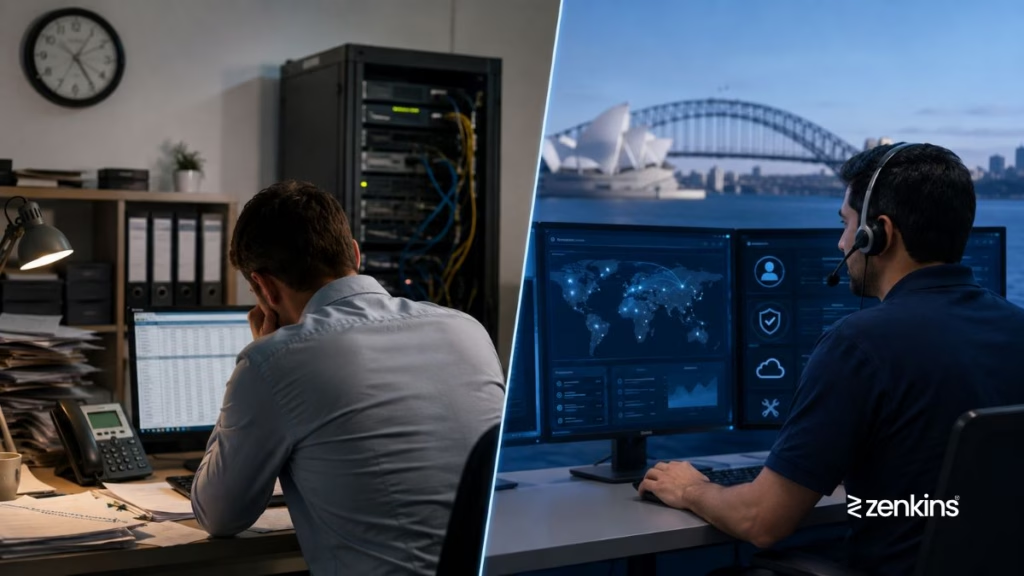
Reactive IT responds after a problem occurs. Proactive monitoring continuously observes systems, identifies anomalies, and triggers preventive actions before users experience disruption.
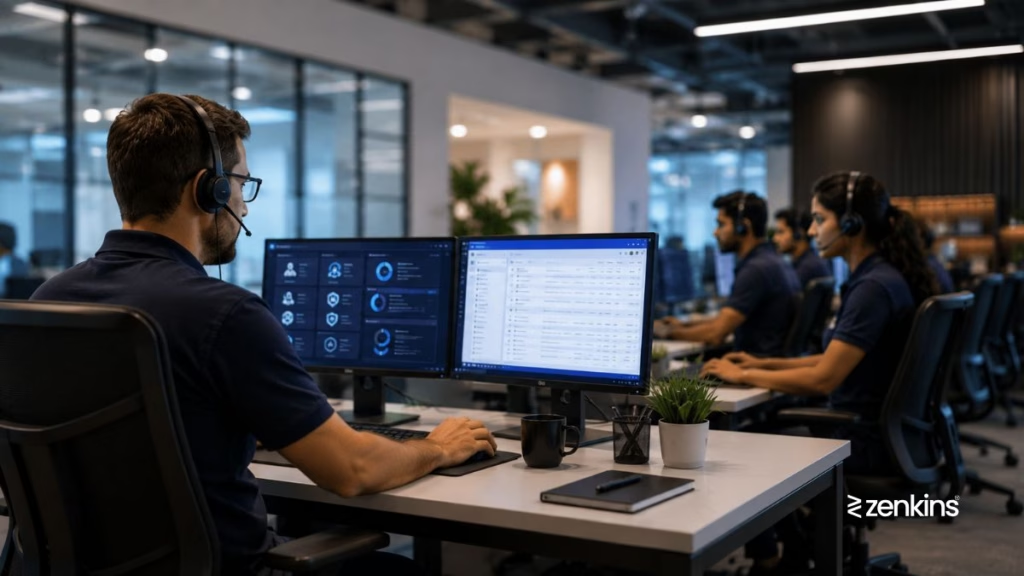
Managed IT providers use centralized monitoring frameworks that operate 24/7, covering infrastructure, applications, networks, endpoints, and security layers. The goal is early detection, not post-incident recovery.
Core Components of Proactive System Monitoring
1. Infrastructure Monitoring
A foundational element of how managed IT providers monitor systems proactively is infrastructure monitoring.
This includes continuous tracking of:
- Servers. Physical and virtual
- Cloud resources
- Storage systems
- Network devices
Metrics such as CPU usage, memory consumption, disk I/O, latency, and uptime are monitored in real time. Threshold-based alerts allow IT teams to act before resource exhaustion causes outages.
2. Network Performance and Availability Monitoring
Network issues are among the most disruptive problems for businesses. Managed IT providers monitor:
- Bandwidth utilization
- Packet loss and latency
- Firewall and router health
- ISP availability
Understanding how managed IT providers monitor systems proactively includes recognizing their ability to detect abnormal traffic patterns that may indicate failures or security threats.
3. Endpoint and Device Monitoring
Modern workplaces rely on thousands of endpoints. Laptops, desktops, mobile devices, and peripherals.
Managed IT providers monitor endpoints for:
- Hardware health
- OS performance
- Patch status
- Antivirus and EDR activity
This ensures device-related issues are resolved before employees submit tickets, significantly improving user productivity.
Application and Service Monitoring
4. Application Performance Monitoring (APM)
A critical aspect of how managed IT providers monitor systems proactively is application-level visibility.
APM tools track:
- Application response times
- Error rates
- Database query performance
- Dependency failures
Instead of waiting for users to report slowness, managed IT teams detect performance degradation early and fix the root cause.
5. Business-Critical Service Monitoring
Managed IT providers identify and prioritize monitoring of business-critical services such as:
- ERP and CRM platforms
- Email and collaboration tools
- Customer-facing applications
- Payment and transaction systems
Service-level monitoring ensures that business workflows remain uninterrupted.
Security Monitoring as a Proactive Discipline
6. Continuous Security Monitoring
Security is deeply embedded in how managed IT providers monitor systems proactively.
Key security monitoring activities include:
- Log analysis and correlation
- Intrusion detection and prevention alerts
- Unusual login behavior tracking
- Endpoint threat detection
Rather than relying solely on periodic audits, proactive security monitoring enables rapid threat containment.
7. Vulnerability and Patch Monitoring
Managed IT providers continuously monitor:
- Missing patches
- Outdated software versions
- Configuration drift
This reduces the attack surface and ensures compliance with security best practices without waiting for vulnerabilities to be exploited.
Automation and Intelligent Alerting
8. Automated Alerts and Threshold Management
Another essential part of how managed IT providers monitor systems proactively is intelligent alerting.
Instead of flooding teams with noise, modern monitoring systems:
- Use dynamic thresholds
- Suppress duplicate alerts
- Escalate only actionable incidents
This allows faster response times and prevents alert fatigue.
9. Predictive Analytics and Trend Analysis
Proactive monitoring is not limited to real-time alerts. Managed IT providers analyze historical data to:
- Predict capacity issues
- Identify recurring failures
- Plan infrastructure scaling
This predictive approach enables preventive maintenance rather than emergency fixes.
Centralized Monitoring and Unified Visibility
10. Single Pane of Glass Monitoring
Managed IT providers use centralized dashboards that consolidate data across:
- Infrastructure
- Applications
- Security
- Endpoints
This unified visibility is critical to understanding how managed IT providers monitor systems proactively at scale, especially for multi-location and hybrid environments.
Incident Prevention Through Proactive Action
11. Automated Remediation
In mature managed IT environments, monitoring systems are connected to automated remediation workflows.
Examples include:
- Restarting failed services
- Clearing disk space
- Scaling cloud resources
- Blocking suspicious IPs
This reduces mean time to resolution and prevents minor issues from becoming major incidents.
Reporting, Transparency, and Continuous Improvement
12. Monitoring Reports and Business Insights
Managed IT providers do not keep monitoring data hidden. Regular reports include:
- System uptime and availability
- Incident trends
- Performance improvements
- Risk reduction metrics
These insights help businesses understand how managed IT providers monitor systems proactively and how it directly impacts operational stability.
Why Proactive Monitoring Matters for Businesses
Organizations that rely on proactive monitoring experience:
- Fewer outages
- Improved system performance
- Stronger security posture
- Predictable IT operations
- Lower long-term IT costs
This is why how managed IT providers monitor systems proactively has become a core evaluation criterion when selecting a managed IT partner.
Zenkins’ Approach to Proactive System Monitoring
At Zenkins, proactive monitoring is built into every managed IT engagement.
Our approach includes:
- 24/7 system and security monitoring
- Business-aligned alert prioritization
- Automation-driven remediation
- Continuous optimization and reporting
By focusing on prevention rather than reaction, Zenkins ensures IT systems remain resilient, secure, and ready to support business growth.
Conclusion
Understanding how managed IT providers monitor systems proactively helps businesses move away from reactive IT and toward predictable, high-availability operations.
Proactive monitoring is not just a technical capability. It is a strategic discipline that protects revenue, productivity, and brand reputation. With the right managed IT partner, proactive monitoring becomes a competitive advantage, not just an operational necessity.