
Cloud-Native Application Development for Manufacturers
Cloud platforms for multi-plant operations, with hybrid and edge options where the plant needs them
Zenkins is a manufacturing software development company. We design and build cloud-native applications for manufacturers: multi-plant platforms, supplier and dealer portals, data and AI services, and the integration layer that connects them to your ERP, MES and plant systems. We put each workload where it belongs, in the cloud, at the edge or on-premises, so production does not depend on a network link. We work with manufacturers in the USA, UK, Europe and Australia.
- What it is: building applications to use cloud strengths such as elastic scaling, managed services, automation and resilience, instead of only moving old software onto cloud servers.
- What we build: multi-plant platforms, supplier and dealer portals, event-driven integration, data and AI services, and SaaS products for industrial equipment makers.
- Where it runs: Azure, AWS or Google Cloud, with hybrid and edge deployment for plants that need local operation.
- How we decide: workload by workload, and microservices only where they earn their complexity.
- How we run it: infrastructure as code, CI/CD, observability, security and cost controls from the first sprint.
- What you get: working software on your cloud account, with documentation, pipelines and full ownership of code and configuration on completion and final payment.
Custom Software • AI Engineering • Manufacturing Systems • Cloud and Data
What Is Cloud-Native Application Development in Manufacturing?
Cloud-native applications are designed to use what the cloud does well: scaling parts of a system independently, using managed databases and messaging, deploying changes automatically and recovering from failure without manual work. That is different from lifting an old application onto a cloud server, which gives you a hosting bill but few of the benefits.
For a manufacturer the question is not whether to use the cloud. It is which workloads gain from it. Multi-plant dashboards, supplier portals, analytics and AI services usually do. Shop-floor control and data capture often need to keep running when the connection to the cloud is slow or down. A cloud-native design for manufacturing places each workload deliberately and connects them reliably.
Zenkins builds on this principle for new applications. For moving existing systems, see Application Modernization. Both sit within a wider digital transformation programme.
One platform for many plants
Shared services and data across plants, with plant-level configuration and a rollout that does not rebuild each time.
Releases without drama
Automated build, test and deployment pipelines let you ship small changes often, with rollback when something goes wrong.
Resilience where it counts
Services fail independently, workloads scale when load rises and plants keep working through network interruptions.
A base for data and AI
Cloud data services and event streams make plant data available to analytics and AI features.
Cloud, hybrid or edge: where each workload should run
The honest answer is usually a mix.
| Workload | Typical home | Why |
|---|---|---|
| Machine data capture and local control logic | Plant or edge | Must keep working during network outages, with low latency |
| Shop-floor applications used during production | Plant or edge, with cloud sync | Operators cannot wait on a distant server |
| Edge analytics and inspection | Edge | Latency, bandwidth and keeping raw data local |
| Multi-plant dashboards and reporting | Cloud | Needs data from every plant in one place |
| Supplier, dealer and customer portals | Cloud | External access, elastic load, managed security services |
| Enterprise integration layer | Cloud, with plant connectors | Connects ERP, MES, PLM and partners |
| Data platform and AI training | Cloud | Storage and compute that scale with need |
| Regulated or sensitive data | Cloud region or on-premises, as required | Data residency and security policy decide |
Note: We decide placement from your latency, availability, data residency and security requirements, then document it in an architecture decision record. For device-level software see Embedded Software Development, and for connected-device platforms see IoT Software Development.
Microservices, modular monolith or managed services: which fits?
We choose the simplest architecture that meets your scale and team, because microservices add cost and complexity
| Approach | What it is | Best when | Main trade-off |
|---|---|---|---|
| Modular monolith | One deployable application, split into well-separated modules | One team, moderate scale, a product still taking shape | Scales as one unit, needs discipline to keep modules clean |
| Microservices | Independent services deployed and scaled separately | Several teams, parts of the system with very different load or release pace | More infrastructure, testing and operations effort |
| Managed and serverless services | Cloud-managed databases, queues, functions and workflows | Spiky or event-driven work, small teams, quick delivery | Platform dependence, needs cost monitoring |
| Event-driven integration | Systems exchange events through a broker | Many systems must react to plant events in near real time | Needs careful design of events and failure handling |
Note: Many manufacturing platforms start as a modular monolith and split out services where load or team structure justifies it. We recommend an approach after reviewing your system, team and growth plans. See Build vs. Buy for the wider decision.
Our Cloud-Native Application Development Services for Manufacturers
Our Cloud-Native Application Development services help organizations build, modernize, and scale applications that fully leverage the power of the cloud. We focus on modular architectures, automation, and resilience to ensure long-term performance and agility.
Cloud architecture and platform design
Get the foundations right. Target architecture, landing zone, networking, identity, environments and cost model on Azure, AWS or Google Cloud, with an architecture decision record for each major choice.
Outputs: Reference architecture • Landing zone design • Decision log
Multi-plant platform development
One platform, many plants. Shared services, plant-level configuration and tenant-aware design for production, quality, supply chain and reporting across plants. See Enterprise Software Development.
Examples: Plant configuration • Shared master data • Cross-plant reporting
Microservices and modular application development
The right level of separation. We build modular monoliths or microservices according to the architecture choice, with clear service boundaries and contracts.
Examples: Domain services • Service contracts • Event handling
Containers and Kubernetes
Consistent deployment, managed scaling. Docker containers and Kubernetes, or simpler managed container services where Kubernetes is more than you need.
Examples: Container builds • Managed Kubernetes • Autoscaling
Hybrid and edge deployment
Run where the plant needs it. Edge services and gateways on or beside the line, synchronised with the cloud, with offline operation and store-and-forward.
Examples: Edge gateway services • Offline-capable apps • Cloud sync
Event-driven integration
React to plant events as they happen. Event streams and messaging between plant systems, ERP, MES and cloud services. See API Development & Integration.
Examples: Plant event streaming • ERP and MES events • Message queues
DevOps, CI/CD and infrastructure as code
Repeatable delivery. Pipelines for build, test, security scan and deploy, with environments defined in code (Terraform) and rollback built in.
Examples: CI/CD pipelines • Terraform environments • Release gates
Cloud security and resilience engineering
Security and recovery designed in. Identity and access management, secrets handling, network segmentation, backup and disaster recovery, with testing of failure scenarios. See QA & Software Testing.
Examples: Identity and access • Backup and recovery • Failure testing
Observability and cost optimisation (FinOps)
See what the system is doing and what it costs. Logging, tracing, alerts and dashboards, plus budgets, tagging and right-sizing so cloud spend stays predictable.
Examples: Monitoring dashboards • Cost alerts • Right-sizing reviews
Not Sure What Should Run in the Cloud and What Should Stay at the Plant?
Describe your plants, your current systems and what you want to build. We will suggest a placement and an architecture direction, and tell you where the risks are.
A cloud-native reference architecture for a multi-plant manufacturer
The layers we design, and what each one does.
| Layer | What it does | What we build |
|---|---|---|
| Plant and edge | Captures machine data and runs local logic, offline-capable | Gateways, edge services, connectors to PLCs and equipment |
| Connectivity | Moves data securely between plants and the cloud | MQTT, OPC UA, secure tunnels, message brokers |
| Integration | Connects ERP, MES, PLM and partners | APIs, event streams, adapters |
| Platform services | Shared capabilities used by every application | Identity, configuration, notifications, workflow, audit |
| Applications | What users see and use | Plant, supplier, quality and management applications |
| Data and AI | Stores, models and uses plant data | Data stores, pipelines, analytics and AI services |
| Operations | Keeps everything running safely | CI/CD, observability, security, backup, cost control |
Security, resilience and cost: what we design in
Cloud-native applications are secure, reliable and affordable only when these are designed in.
| Concern | What goes wrong | How we design for it |
|---|---|---|
| Identity and access | Too many people can reach too much | Single sign-on, role-based access, least privilege, multi-factor authentication |
| Secrets and configuration | Keys in code or shared files | Managed secrets stores, rotation, environment separation |
| Plant and cloud boundary | A plant link becomes an attack path | Network segmentation, controlled connections, reviewed with your OT team |
| Resilience | One failure stops a plant or a platform | Health checks, retries, redundancy, tested backup and recovery |
| Data protection | Sensitive designs or supplier data are exposed | Encryption in transit and at rest, region choice, access logging |
| Cost growth | Cloud bills climb unnoticed | Budgets and alerts, tagging, right-sizing, scaling limits |
Standards note: Plants and products may need to meet requirements such as IEC 62443 for industrial cybersecurity, or customer and regulatory security rules. We design and document software to support them. Certification belongs to your organisation and your assessor, and we do not claim certification for your systems.
Our cloud-native development process
Decide where things run, prove it on a small scope, then build and scale.
Assessment and cloud strategy
We review your goals, systems, plants, network constraints, data rules and team skills, and define success measures.
Output: Assessment and workload placement view.
Architecture and technology selection
We choose the architecture style, cloud services, edge approach, security model and cost model, and record the decisions.
Output: Reference architecture and decision log.
Landing zone and pipeline setup
We prepare the cloud environments, identity, networking and CI/CD pipelines as code, before feature work.
Output: Working environments and a deployable skeleton.
Pilot build
We build one priority capability in two-week sprints with demos, and run it with real users on a single plant or process.
Output: Working pilot with measured results.
Integration and edge
We connect the platform to ERP, MES, PLM and plant systems, and deploy edge components where needed. We test the whole data path.
Output: Integrated platform and tested edge deployment.
Testing, security and resilience validation
Functional, performance and security testing, plus failure tests such as network loss and service restarts.
Output: Test evidence and a resilience report.
Rollout, operations and optimisation
We roll out plant by plant, set up monitoring and cost reviews, and support the platform after go-live.
Output: Live platform and an operations plan.
Cloud-native technology stack
Chosen around your cloud, your plants and your team, not our preferred vendor list.
Cloud platforms
Microsoft Azure, Amazon Web Services, Google Cloud Platform
Containers and orchestration
Docker, Kubernetes (AKS, EKS, GKE), managed container services
Infrastructure as code
Terraform, Ansible, Bicep or CloudFormation
CI/CD
GitHub Actions, GitLab CI, Azure DevOps Pipelines, Jenkins, ArgoCD
Messaging and events
Apache Kafka, RabbitMQ, Azure Service Bus, AWS SNS and SQS, MQTT
Databases and storage
PostgreSQL, SQL Server, MongoDB, Redis, time-series databases, cloud object storage
Identity and security
Microsoft Entra ID, OAuth 2.0 and OpenID Connect, Keycloak, cloud key management
Observability
Prometheus, Grafana, ELK Stack, Azure Monitor, AWS CloudWatch, OpenTelemetry
Edge and hybrid
Azure IoT Edge, AWS IoT Greengrass, lightweight Kubernetes
Cloud-native platforms across manufacturing industries
What we build most often in each sector.
Automotive & Mobility
Supplier and dealer platforms, traceability and multi-plant visibility on a shared cloud platform.
Semiconductor & Electronics
Data platforms for yield, inspection and traceability data that outgrow on-premises servers.
Industrial Equipment & Machinery
Connected-equipment and service platforms, and SaaS products sold with your machines.
Electrical & Energy Equipment
Project, test-data and field-service platforms across sites.
Chemicals & Process Manufacturing
Cloud reporting and analytics on process data, with plant-side capture that keeps working offline.
Pharmaceuticals & Life Sciences
Validated, audit-ready platforms with region choice and documented change control. Software supports validation, and your quality team owns it.
Consumer & Industrial Products
Demand, inventory and supplier platforms that scale with seasonal load.
New Energy & Advanced Manufacturing
Fast-growing production and test data platforms, battery and charging platforms and cloud telemetry.
Why choose Zenkins for cloud-native development?
Cloud engineering that respects how plants actually run.
We design for the plant, not just the cloud
Network limits, offline operation and OT boundaries are part of the architecture from the start.
Why it matters: Production does not depend on a link.
We choose the simplest architecture that works
Modular monolith, microservices or managed services, based on your scale and team.
Why it matters: Lower cost and less operational burden.
Delivery is automated
Infrastructure as code, CI/CD, security scanning and observability are set up before feature work.
Why it matters: Fast, safe releases.
Cost is designed in
Budgets, tagging, right-sizing and scaling limits from the first sprint.
Why it matters: The cloud bill stays predictable.
Integration with what you run
New platforms connect to your ERP, MES, PLM and plant systems through APIs and events.
Why it matters: A working data path, not another island.
India-based engineering, global delivery
Engineering teams in Ahmedabad and Pune, with two-week sprints and defined overlap hours for manufacturers in North America, the UK, Europe and Australia. You own the cloud account and the code.
Why it matters: Senior capacity with transparent governance.
Start Your Cloud-Native Project
Tell us what you want to build, which plants and systems are involved, and where your constraints are: network, data residency or uptime. We will suggest an architecture direction, a placement for each workload and a first phase you can measure. Our engineering teams in Ahmedabad and Pune deliver to manufacturers worldwide, with defined overlap hours for North America, the UK and Europe.
Explore Our Latest Insights
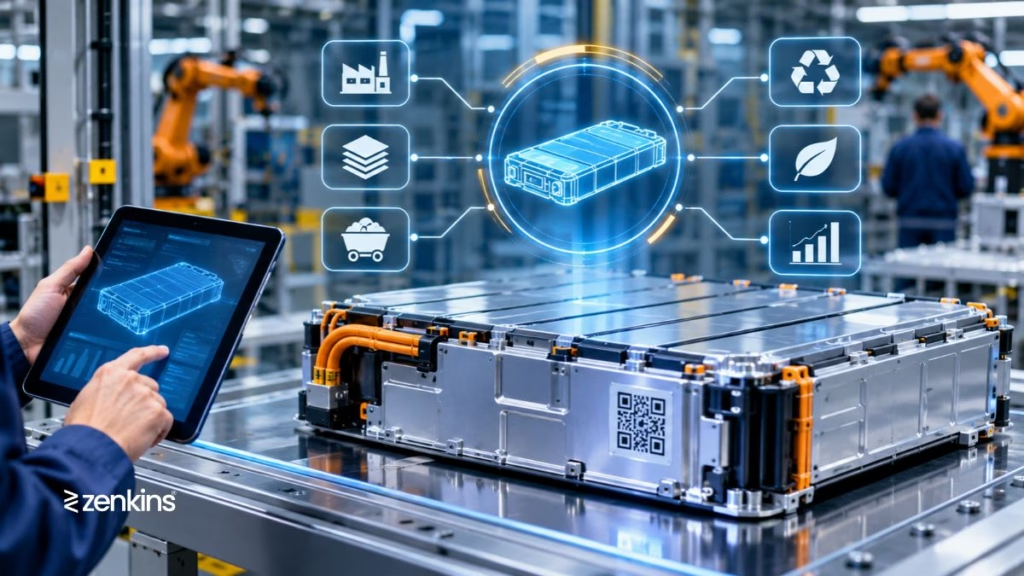
EU Battery Passport Software: What Manufacturers Must Build Before 18 February 2027

Legacy ERP: Modernize, Replace or Integrate?

A Manufacturing Digital Transformation Roadmap: Where to Start
Cloud-native application development for manufacturers: frequently asked questions
Answers on architecture, plants, security, cost, timelines and vendors.
What is cloud-native application development?
It is building applications to use the strengths of the cloud: independent scaling of components, managed services, automated deployment and recovery from failure. It is not the same as hosting an old application on a cloud server. For manufacturers it also means deciding which workloads belong in the cloud, at the edge or on-premises.
Does a manufacturer need to be cloud-native?
Not for everything. Multi-plant reporting, supplier portals, analytics and AI services gain a lot from cloud-native design. Shop-floor control and data capture often stay at the plant or edge so production keeps running through network problems. We assess each workload.
What are hybrid and edge deployments, and when do we need them?
Hybrid means part of the system runs in the cloud and part at the plant or on-premises. Edge means software runs on a gateway or computer beside the machines. You need them when latency, uptime during network loss, data residency or bandwidth make a cloud-only design risky.
Should we use microservices or a monolith?
Use the simplest option that meets your scale and team. A modular monolith suits many manufacturing applications, and microservices help when several teams or very different load patterns justify the extra operational effort. We recommend an approach after reviewing your system. See the comparison above.
Do we need Kubernetes?
Not always. Kubernetes suits larger platforms with many services and a team to operate it. Smaller systems often run well on managed container services or platform services with less overhead. We recommend what fits your size and skills.
Which cloud is best: Azure, AWS or Google Cloud?
The best cloud is usually the one your organisation already uses, because identity, security tooling and skills carry over. Microsoft estates often favour Azure, AWS suits teams with strong AWS skills or specific services, and Google Cloud is strong in data and analytics. We build on the one you choose and can advise on the decision.
How do we avoid vendor lock-in?
Fully avoiding it is rarely worth the cost. We reduce it with containers, open standards, infrastructure as code and clear service boundaries, so moving is possible when needed, and we are explicit about where we use cloud-specific services and why.
How secure is a cloud-native platform, and how does it work with plant networks?
Security depends on the design and operation. We use single sign-on, least privilege, managed secrets, encryption, network segmentation between plant and cloud, logging and tested recovery, and we review the plant boundary with your OT team. Certification of your systems belongs to your organisation.
How much does it cost, and what about cloud running costs?
Build cost depends on scope, the number of plants and integrations, and the edge and security requirements.
How long does it take?
An architecture and assessment phase typically takes a few weeks. A pilot platform with one integration often takes 3 to 6 months, and a multi-plant platform is delivered in phases over 9 to 18 months or more.
Can we convert an existing application to cloud-native?
Often yes, in phases. We assess whether to rehost, replatform, refactor or rebuild, and where to wrap the old system with APIs. See Application Modernization and Legacy ERP: Modernize, Replace or Integrate?
Do you work with manufacturers outside India, and who owns the cloud account?
Yes. Zenkins is headquartered in Ahmedabad with an engineering team in Pune, and we work with manufacturers in the USA, UK, Europe and Australia, with defined overlap hours. The cloud account, the infrastructure code and the source code are yours.