Table of Contents
Introduction: The Scaling Dilemma Every Growing Business Faces
Every growing business eventually hits a point where existing systems start breaking down. Spreadsheets become unreliable, disconnected tools create inefficiencies, and manual processes begin to slow down growth. What worked for a startup or early-stage company no longer supports expansion.
At this stage, businesses must make a critical decision: how to build a scalable technology foundation.
The question is no longer whether to invest in software. It is about choosing the right type of software that can grow alongside your business.
Should you implement an ERP system that standardizes operations across departments? Or should you invest in custom software tailored specifically to your workflows and long-term strategy?
This decision directly impacts operational efficiency, cost structure, agility, and long-term scalability. Choosing the wrong approach can lead to bottlenecks, rising costs, and limited growth potential.
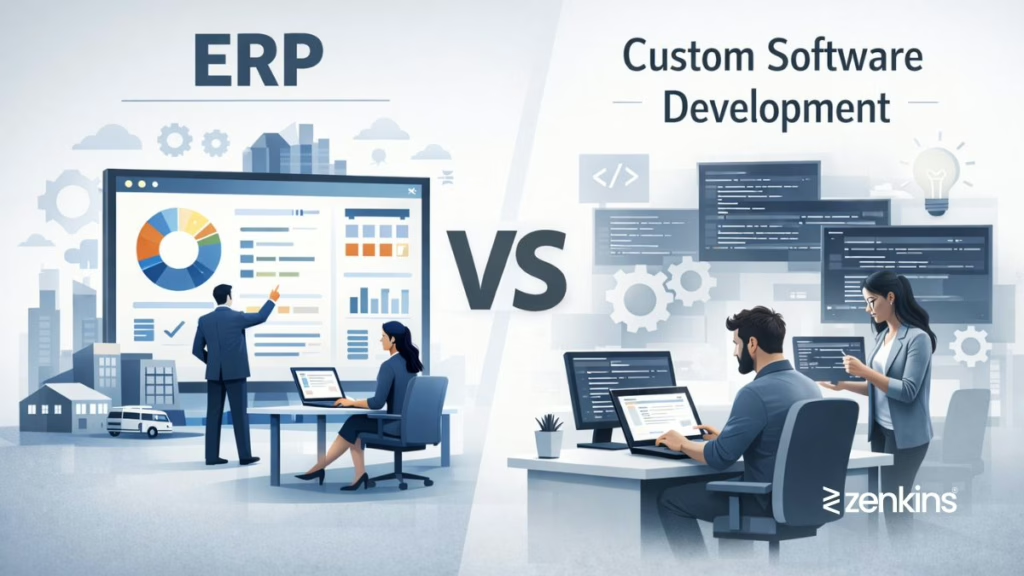
In this guide, we will explore both ERP and custom software development in depth, compare their scalability, and help you determine which option is best suited for your business in 2026.
What is ERP Software in 2026?
Enterprise Resource Planning (ERP) software is a centralized platform that integrates core business functions such as finance, human resources, inventory, procurement, and operations into a single system.
Modern ERP systems have evolved significantly. They are now cloud-based, modular, and often enhanced with AI-driven capabilities that provide predictive insights and automation.
Key Characteristics of ERP Systems
ERP systems today offer:
- Centralized data management across departments
- Standardized workflows and processes
- Real-time reporting and analytics
- Scalable cloud infrastructure
- Pre-built modules for various business functions
The primary goal of ERP is to eliminate silos and ensure that all teams operate with consistent, accurate data.
Why Businesses Adopt ERP
Businesses typically choose ERP to improve efficiency and control. Instead of managing multiple disconnected tools, ERP provides a unified system that simplifies operations.
Key benefits include:
- Improved visibility across departments
- Reduced manual work through automation
- Better compliance and reporting
- Streamlined operations
ERP is particularly valuable for organizations with structured processes and operational complexity.
What is Custom Software Development?
Custom software development involves building applications specifically designed to meet the unique needs of a business. Unlike ERP systems, which are designed for a wide range of companies, custom software is tailored to fit exact workflows and business objectives.
Key Characteristics of Custom Software
Custom solutions provide:
- Tailored functionality aligned with business processes
- Flexibility to adapt as the business evolves
- Seamless integration with existing tools
- Control over features, performance, and scalability
Custom software is built with a long-term vision in mind, enabling businesses to create systems that support their strategic goals.
Why Businesses Choose Custom Development
Companies choose custom software when they need differentiation or when existing tools cannot meet their requirements.
Benefits include:
- Full control over the product roadmap
- Ability to build unique workflows and features
- No dependency on third-party limitations
- Greater alignment with business strategy
Custom development is often the preferred choice for businesses that prioritize innovation and flexibility.
ERP vs Custom Software: The Core Difference
The fundamental difference between ERP and custom software lies in their approach.
ERP systems are designed to standardize operations across many businesses. They offer predefined modules and workflows that companies adopt.
Custom software, on the other hand, is built around a specific business. It adapts to your processes rather than forcing you to adapt to it.
This difference becomes critical when evaluating scalability.
Understanding Scalability in 2026
Scalability today goes beyond handling more users or transactions. It includes the ability to:
- Support multi-location and global operations
- Handle increasing data complexity
- Adapt to new business models
- Integrate with modern technologies
- Enable faster decision-making
A truly scalable system evolves with your business without requiring constant rework or replacement.
ERP Scalability: Strengths and Limitations
Where ERP Scales Well
ERP systems are highly effective in scaling structured operations.
They perform well in the following areas:
Multi-Department Integration
ERP connects various departments such as finance, HR, and supply chain into a unified system. This ensures consistency and reduces duplication of work.
Process Standardization
Standardized workflows improve efficiency and reduce errors, making it easier to scale operations across teams and locations.
Faster Implementation
ERP systems can often be implemented relatively quickly compared to building software from scratch.
Predictable Growth
ERP provides a stable and structured foundation that supports steady, predictable growth.
Where ERP Struggles to Scale
Despite its strengths, ERP has limitations that can impact long-term scalability.
Limited Flexibility
ERP systems are built around predefined processes, which may not align perfectly with your business needs.
Customization Challenges
Customizing ERP systems can be complex and expensive, often requiring specialized expertise.
Rising Costs
Licensing and subscription costs increase as your business grows and adds more users.
Innovation Constraints
ERP systems are not designed for rapid experimentation or innovation, which can limit competitive advantage.
Custom Software Scalability: Strengths and Limitations
Where Custom Software Excels
Custom software offers unmatched flexibility and scalability in dynamic environments.
Tailored Growth
Systems can be designed to evolve alongside your business, supporting new features and workflows as needed.
Unlimited Customization
There are no restrictions on how the system can be built or modified.
Competitive Advantage
Custom software enables businesses to create unique capabilities that differentiate them in the market.
Integration Flexibility
Custom solutions can integrate seamlessly with other tools, platforms, and technologies.
Where Custom Software Faces Challenges
Higher Initial Investment
Custom development requires upfront time and financial investment.
Longer Development Time
Building software from scratch takes longer than implementing an existing ERP system.
Maintenance Responsibility
Businesses are responsible for maintaining and updating the software.
Dependence on Development Team
The quality and scalability of the system depend on the expertise of the development team.
ERP vs Custom Software: Detailed Comparison
Cost
ERP typically has lower upfront costs but ongoing subscription fees. As your business grows, these costs can increase significantly.
Custom software requires higher initial investment but can offer better long-term value by eliminating recurring licensing fees.
Time to Market
ERP systems can be deployed faster due to pre-built modules.
Custom software takes longer to develop but offers a more precise fit for your business.
Flexibility
ERP systems have limited flexibility and require adaptation.
Custom software provides complete flexibility and control.
Scalability
ERP scales well for standardized operations.
Custom software scales better for businesses with unique or evolving needs.
Real-World Use Cases
When ERP is the Right Choice
ERP is ideal for businesses with structured and repeatable processes.
Examples include:
- Manufacturing companies managing inventory and supply chains
- Retail businesses handling large volumes of transactions
- Organizations requiring standardized financial reporting
When Custom Software is the Better Choice
Custom software is best for businesses that need flexibility and innovation.
Examples include:
- Startups building unique digital platforms
- SaaS companies delivering specialized services
- Fintech companies with complex workflows
The Hybrid Approach: Best of Both Worlds
In 2026, many businesses are adopting a hybrid approach that combines ERP and custom software.
How It Works
- ERP handles core operations such as finance and HR
- Custom software manages customer experience, analytics, or specialized workflows
This approach allows businesses to benefit from both stability and flexibility.
ERP Trends in 2026
ERP systems continue to evolve with new capabilities.
Key trends include:
AI Integration
AI is enhancing automation, forecasting, and decision-making.
Cloud-First Systems
Cloud ERP solutions provide better scalability and cost efficiency.
Industry-Specific Solutions
Vendors are developing ERP systems tailored to specific industries.
Continuous Updates
ERP is becoming an evolving platform rather than a one-time implementation.
Custom Software Trends in 2026
Custom development is also advancing rapidly.
Low-Code and No-Code Platforms
These tools enable faster development and iteration.
AI-Powered Applications
Custom software increasingly includes intelligent features and automation.
Microservices Architecture
Systems are built as modular components, improving scalability and flexibility.
Which One Actually Scales Better?
The answer depends on your business needs.
ERP is Better When:
- Your processes are standardized
- You need quick implementation
- You prioritize operational efficiency
Custom Software is Better When:
- Your business model is unique
- You need flexibility and innovation
- You are scaling rapidly
The Real Answer
The most scalable approach is not choosing one over the other blindly. It is selecting the right solution based on your business strategy.
How Zenkins Helps You Make the Right Choice
At Zenkins, we specialize in building scalable technology solutions for growing businesses.
We help you:
- Evaluate ERP vs custom software based on your needs
- Design scalable architectures
- Develop custom solutions tailored to your business
- Integrate ERP systems with modern technologies
- Ensure long-term scalability and performance
Our goal is to help you build systems that support growth without limitations.
Actionable Framework: How to Decide
To choose the right solution, consider the following:
- Are your processes standardized or unique?
- Do you need speed or flexibility?
- What is your long-term growth strategy?
- Can your current systems support future expansion?
Answering these questions will guide you toward the right decision.
FAQs: ERP vs Custom Software Development (2026)
Which is more scalable in 2026: ERP or custom software development?
Both ERP and custom software can scale, but in different ways. ERP systems scale well for standardized operations such as finance, HR, and inventory management across multiple locations. Custom software, however, scales better for businesses with unique workflows, evolving business models, or rapid growth requirements. For most growing businesses in 2026, a hybrid approach combining ERP for core operations and custom software for differentiation offers the best scalability.
Is ERP cheaper than custom software development in the long run?
ERP usually has a lower upfront cost but comes with ongoing licensing, subscription, and customization expenses that increase as your business grows. Custom software requires a higher initial investment but can be more cost-effective in the long run since it eliminates recurring licensing fees and is built specifically for your needs. Businesses planning long-term scalability often find custom software delivers better ROI over time.
When should a business choose custom software over ERP?
A business should choose custom software when its processes are unique, highly specialized, or provide a competitive advantage. This includes startups, SaaS companies, fintech platforms, and businesses with complex workflows. Custom software is also ideal when flexibility, innovation, and integration with multiple systems are critical for growth.
Can ERP and custom software be used together?
Yes, many growing businesses in 2026 use a hybrid model that combines ERP and custom software. ERP systems handle core functions like accounting, HR, and supply chain, while custom software manages customer experience, analytics, or unique business processes. This approach balances operational efficiency with flexibility and innovation, making it one of the most scalable strategies.
How do I decide between ERP and custom software for my business?
The decision depends on your business model, growth stage, and long-term goals. If your processes are standardized and you need quick implementation, ERP is a good choice. If your business requires flexibility, innovation, and differentiation, custom software is better. Evaluating factors like scalability needs, budget, and future expansion plans will help you choose the right solution. Many businesses benefit from consulting experts like Zenkins to make a strategic decision.
Conclusion: Scaling is About Strategy, Not Just Software
ERP and custom software are not competing solutions. They serve different purposes.
ERP provides structure, consistency, and efficiency.
Custom software provides flexibility, innovation, and differentiation.
The most successful businesses in 2026 understand how to leverage both strategically.
Instead of asking which option is better, focus on which solution aligns with your current needs and future goals.
Ready to Scale Your Business?
If you are planning to scale and need expert guidance on ERP or custom software development, Zenkins can help.
We work with startups, SMBs, and enterprises to design and build scalable technology solutions that drive real growth.
Let’s build a system that grows with your business, not against it.