
Enterprise Software Development for Manufacturers
Platforms for multi-plant operations, built to integrate with the systems you already run
Enterprise software development is the design, build and operation of software for organisations with many users and sites, strict security, deep integration with ERP, MES, PLM and identity systems, and dependable uptime. Zenkins is a manufacturing software development company. We build the platforms and integration layers that connect plants, suppliers and corporate systems for manufacturers in the USA, UK, Europe and Australia.
- What makes software “enterprise”: many plants and users, granular access control, full audit trails, deep integration and high availability.
- What we build: multi-plant production and quality platforms, ERP, MES and PLM integration, supplier and dealer portals, workflow automation, enterprise data platforms and enterprise mobile apps.
- How we deliver: eight phases from enterprise discovery through a pilot plant, rollout and SLA-backed support, with security and compliance designed into the architecture.
- Who it is for: CTOs and IT leaders scaling across plants, operations leaders automating complex workflows, and regulated manufacturers that need audit-ready systems.
- What you own: source code, schemas and documentation, transferred on completion and final payment.
Custom Software • AI Engineering • Manufacturing Systems • Cloud and Data
What Is Enterprise Software Development?
Enterprise software supports many concurrent users across plants and business units, enforces granular access control, produces full audit trails, integrates with systems such as ERP, identity providers and data warehouses, and keeps working as the organisation grows without architectural rewrites.
In a manufacturing enterprise that usually means several plants and legal entities on one platform, shared master data for parts, suppliers and machines across ERP, MES and PLM, approval and quality workflows that satisfy auditors, integration with shop-floor systems and machine data, and high availability during production hours.
The hard part is rarely a single feature. It is the number of connections: each integration, role, region and rule multiplies the design and testing effort. Zenkins treats that complexity as the core engineering problem. We design architecture, integration patterns, security and operations before we write feature code.
Multi-plant production and quality platform
One platform, plant-level configuration. Production management, supply chain visibility and quality systems that operate across plants with shared master data and local variation.
ERP, MES and PLM integration layer
Systems that act as one. An integration layer that moves orders, engineering changes, confirmations and quality data between systems reliably.
Supplier and partner platform
Collaboration at scale. Role-based portals with single sign-on, document exchange and workflow integration for suppliers, dealers and service partners.
Enterprise data platform
One governed view. Data warehouses and lakehouses feeding plant and leadership dashboards, built on data engineering foundations.
Enterprise, custom, or off-the-shelf software: Choosing the right approach
The categories overlap. The difference is scale, integration depth and governance.
| Enterprise software (this page) | Custom software | Off-the-shelf | |
|---|---|---|---|
| Typical scope | Several plants, entities or business units on one platform | One plant, one team or one focused process | Generic functions |
| Integration depth | Many systems: ERP, MES, PLM, identity, data warehouse | A few, usually one or two core systems | Limited to what the vendor supports |
| Access control | Multi-level roles across plants and partners, single sign-on | Role-based for one organisation or team | Basic, vendor-defined |
| Audit and traceability | Full audit trails and approvals designed in | As specified | Varies, often limited |
| Availability design | Designed for production-hours uptime, with an agreed SLA | Standard hosting | Vendor-controlled |
| Compliance support | Designed to support your audits and regulated processes | On request | Rarely tailored |
| Data governance | Full control, shared master data | Partial or full | Vendor-controlled |
| Scalability | Designed for growth in plants, users and data | Sized for the use case | Fixed or limited |
| IP ownership | Client-owned | Client-owned | Vendor-owned |
Note: Off-the-shelf tools work well for generic functions. Enterprise software development is the right investment when scale, security, integration complexity or competitive differentiation are non-negotiable. Software supports compliance but does not certify a plant. For single-plant tools and focused applications see Custom Software Development. To weigh the options, read Build vs. Buy.
Who Needs Enterprise Software Development?
Enterprise software is the right investment when your requirements exceed what off-the-shelf tools can deliver — whether due to scale, security, integration complexity, or the need to own and control your core business systems.
CTOs and engineering leaders scaling across plants
One platform, consistent governance. When one platform must serve several plants, geographies and entities with the same standards.
Examples: Multi-plant rollout • Shared services • Platform governance
IT directors replacing legacy core systems
Remove the system that blocks growth. Ageing operations, ERP-adjacent or HR systems that add compliance risk. See Application Modernization.
Examples: Legacy replacement • Phased migration • Data migration
Operations leaders automating complex workflows
Approvals that span systems and people. Procurement, quality and engineering change processes that cross several systems and departments.
Examples: Engineering change • Procurement approvals • Deviation routing
Regulated manufacturers
Audit-ready by design. Pharmaceutical, automotive and other regulated producers who need traceability and evidence.
Examples: Audit trails • Traceability • Controlled workflows
Our Enterprise Software Development Services
Zenkins delivers the full range of enterprise application development services for manufacturers worldwide, from new platform builds to the integration layers that connect what you already run.
Multi-plant manufacturing platforms
Plants on one platform. Production management, supply chain visibility and quality systems that operate across plants, with shared master data and plant-level configuration.
Examples: Production management • Supply chain visibility • Quality systems
ERP development and integration
Extend or connect your ERP. Custom ERP modules and integration layers for finance, procurement, inventory, production and HR, plus connectors to SAP, Oracle, Microsoft Dynamics and other platforms. See ERP solutions.
Examples: Custom ERP modules • SAP and Oracle connectors • Dynamics integration
MES and PLM integration
Supplier, dealer and partner portals
Secure collaboration. Role-based portals with single sign-on, document exchange and workflow integration.
Examples: Supplier onboarding • Dealer ordering • Partner documents
Workflow and process automation
Approvals with audit evidence. Rule-based engines for approvals, deviations, engineering change requests and compliance routing, with full audit evidence.
Examples: Deviation routing • Change approvals • Compliance workflows
Data platforms and business intelligence
One governed view of the enterprise. Enterprise warehouses and lakehouses, ETL pipelines and dashboards for plants and leadership. See Data Engineering.
Examples: Enterprise reporting • KPI dashboards • Governed datasets
Enterprise mobile applications
Field and plant work on mobile. Apps for field service, inspections and plant operations with offline capability, enterprise security controls and back-office integration.
Examples: Field service • Inspections • Plant rounds
Enterprise API development and integration
Reliable system connections. REST, GraphQL, SOAP, gRPC and event-driven integration between enterprise systems. See API Development & Integration.
Examples: API gateway • Event streaming • Legacy adapters
Legacy enterprise system modernisation
Replace without losing business rules. Re-platform, refactor or rebuild legacy systems while preserving rules and data, with zero-downtime migration strategies and parallel running where needed.
Examples: Re-platforming • Data migration • Parallel running
AI for enterprise workflows
Intelligence inside the platform. Add copilots, document intelligence and predictive analytics to enterprise platforms. See AI-Powered Software Development.
Examples: Enterprise copilots • Document processing • Predictive analytics
Planning a Multi-Plant Platform or an ERP, MES and PLM Integration?
Tell us which plants, systems and users are involved, and what is going wrong today. We will suggest an architecture direction and a first phase that manages risk.
How we design platforms that run many plants
The principles behind a platform that scales without rewrites.
| Principle | What it means | Why it matters in manufacturing |
|---|---|---|
| Shared master data, local variation | One source for parts, suppliers, machines and customers, with plant-level configuration | Plants differ in practice. The platform holds a shared core and allows controlled variation. |
| Identity and access first | Single sign-on, role-based access across plants, suppliers and partners | Suppliers and plants need different views of the same data. |
| An integration layer, not point-to-point links | APIs, events and a documented contract for each system | One plant’s change should not break the others. |
| Audit and traceability by default | Every approval, change and record has a history | Quality events, audits and recalls depend on it. |
| Resilience at the plant edge | Plants keep working through network interruptions and sync later | Production does not stop because a link fails. |
| Observability | Logging, tracing and alerts on integrations and workflows | You find failures before the shop floor does. |
| Security by design | Encryption, least privilege, secrets management and review in the build | Plant and product data are valuable. |
Our Enterprise Software Development Process
Enterprise Discovery
Stakeholder interviews, process mapping across plants, a technical landscape audit, compliance requirements and an integration inventory.
Output: Requirements specification and risk register.
Solution Architecture
Scalability architecture, data model, security controls, integration patterns and technology choices.
Output: Architecture document and decision log.
UI/UX for enterprise roles
Wireframes and prototypes built around plant, supplier and corporate roles, reviewed before development.
Output: Approved prototypes.
Agile Sprint Delivery
Two-week sprints with demos, release candidates and a dedicated QA cycle. Stakeholders can access a staging environment throughout.
Output: Working, tested software at each milestone.
QA, security and performance
Functional, regression, integration, load and security testing, with vulnerability assessment and a third-party review where you require it.
Output: Test evidence and a security report.
Pilot plant and integration
We deploy to one plant first, integrate with ERP, MES, PLM, identity and data systems, and agree success measures. We use CI/CD with monitoring, alerting and rollback.
Output: A proven pilot and a plant rollout template.
Rollout, training and change management
We roll out plant by plant in waves, with role-based training, administrator documentation, end-user guides and onboarding support.
Output: Multi-plant rollout and trained users.
Support and optimisation
SLA-backed support, performance monitoring, security patching and a quarterly review of the roadmap.
Output: support plan and prioritised roadmap.
Technology & Engineering
Mobile
React Native, Flutter, Swift (iOS), Kotlin (Android)
Databases
Microsoft SQL Server, PostgreSQL, MySQL, Oracle Database, MongoDB, Redis
Cloud and infrastructure
Microsoft Azure, AWS, Google Cloud Platform, multi-cloud and hybrid
Enterprise integrations
SAP, Oracle ERP, Microsoft Dynamics, Microsoft 365 and Active Directory, Salesforce, ServiceNow, REST, GraphQL, SOAP and gRPC
DevOps and CI/CD
Docker, Kubernetes, Terraform, Ansible, GitHub Actions, GitLab CI, Jenkins, ArgoCD
Security
Multi-factor authentication, role-based access control, encryption in transit and at rest, security scanning
Monitoring & observability
Prometheus, Grafana, ELK Stack, Azure Monitor, AWS CloudWatch, Datadog
Software engineered for real manufacturing operations
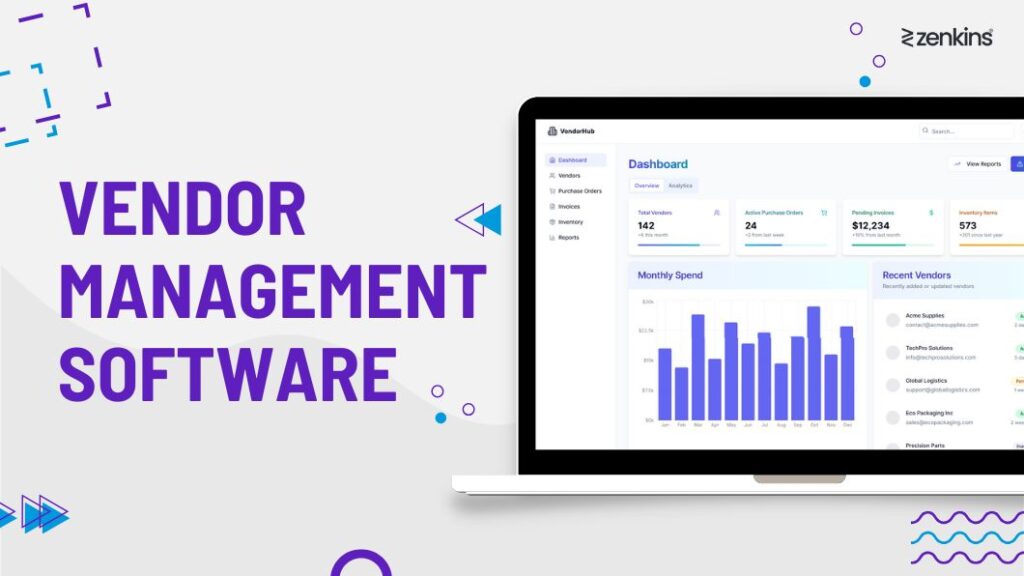
Ultimate Vendor Management Software: Streamline Operations & Cut Costs by 50%

Manufacturing ERP Software Solutions: A Case Study

EV Charging Infrastructure Software: A Case Study
Enterprise platforms across manufacturing industries
Scale, regulation and system landscapes differ by sector.
Automotive & Mobility
Supplier-heavy, multi-plant networks. Supplier collaboration, multi-plant production visibility and dealer and service platforms.
Examples: Supplier collaboration • Plant visibility • Dealer platforms
Semiconductor & Electronics
Data-intensive operations. Fab and assembly data integration, traceability and quality analytics.
Examples: Data integration • Traceability • Quality analytics
Industrial Equipment & Machinery
Configure-to-order and service. Configure-to-order, service and spare-parts platforms with ERP integration.
Examples: Configure to order • Spare parts • Service platforms
Electrical & Energy Equipment
Project-driven manufacturing. Project and order tracking, test data and field service.
Examples: Project tracking • Test data • Field service
Chemicals & Process Manufacturing
Compliance-driven operations. Batch and quality systems, safety and compliance and supply chain.
Examples: Batch systems • Safety and compliance • Supply chain
Pharmaceuticals & Life Sciences
Validated, audit-ready systems. Quality management, batch records and validated workflows with audit trails.
Examples: Quality management • Batch records • Validated workflows
Consumer & Industrial Products
High-volume supply chains. Demand and inventory platforms, supplier management and quality tracking.
Examples: Inventory platforms • Supplier management • Quality tracking
New Energy & Advanced Manufacturing
Rapidly scaling production. Production data platforms, line integration and quality software.
Examples: Production data • Line integration • Quality software
Why Choose Zenkins for Enterprise Software Development?
Enterprise programmes succeed on governance, integration and trust as much as on code.
Senior-led delivery
A solution architect and a delivery manager lead each engagement.
Why it matters: Hard decisions are made by experienced people.
Integration depth
We design integrations to be resilient, observable and maintainable.
Why it matters: The system keeps working when neighbouring systems change.
Manufacturing domain knowledge
We understand plant workflows, quality processes and supplier networks, so platforms fit how manufacturers operate.
Why it matters: Shorter discovery and software people use.
Security and compliance by architecture
Access control, encryption, audit logging and testing are designed in during architecture.
Why it matters: Audits are evidence, not scrambles.
Full IP ownership
Source code, schemas and documentation transfer to you.
Why it matters: No dependency on us.
India-based engineering, global delivery
Engineering teams in Ahmedabad and Pune, with steering updates, executive summaries and shared dashboards, and defined overlap hours for North America, the UK, Europe and Australia.
Why it matters: Senior capacity with governance that suits large teams.
Ready to build the platform your plants will run on?
Whether you are connecting ERP, MES and PLM, launching a supplier platform or replacing a legacy core system, Zenkins can design, deliver and support it in phases that manage risk. Tell us which plants, systems and users are involved, and we will suggest an architecture direction and a first phase. Our engineering teams in Ahmedabad and Pune deliver to manufacturers worldwide.
No commitment required. We scope the fit first.
Explore Our Latest Insights
Legacy ERP: Modernize, Replace or Integrate?
A Manufacturing Digital Transformation Roadmap: Where to Start
Build vs. Buy: How to Decide on Custom Manufacturing Software
Enterprise software development for manufacturers: frequently asked questions
Answers on scope, integration, compliance, rollout, cost and support
What is enterprise software development?
It is the design and build of large-scale software for organisations with complex operations, many users and sites, deep integrations and strict security and compliance needs. In manufacturing it usually means platforms that serve several plants, share master data and connect ERP, MES, PLM, supplier and quality systems.
How is enterprise software different from custom software?
Enterprise software is custom development at larger scale: multi-level roles across plants and partners, full audit trails, many integrations, high-availability design and wider governance. A focused tool for one plant or team is usually custom software. See Custom Software Development.
Can you integrate with our ERP, MES and PLM?
Yes. We build integration layers for platforms such as SAP, Oracle ERP and Microsoft Dynamics using REST, GraphQL, SOAP and event-driven patterns, and we document and monitor each integration. See API Development & Integration.
How do you roll out across several plants?
We pilot at one plant first with agreed success measures, turn it into a rollout template and then deploy in waves, with training and a support period at each plant. Plant-level configuration handles real differences without forking the platform.
How long does an enterprise software project take?
A first production release for a well-defined scope can take 4 to 6 months. A focused enterprise module typically takes 6 to 12 months, and multi-module platforms with many integrations typically take 12 to 24 months, delivered in phases.
How much does it cost?
Cost depends on the number of plants, users, roles and integrations, the data volume and the compliance scope.
How do you handle compliance and audits?
We capture requirements in discovery and turn them into architecture: access control, encryption, audit logging and retention. For regulated manufacturing we work with your quality and compliance teams. Software supports compliance but does not certify a plant, and your team owns the validation.
How do you handle single sign-on and access across plants and suppliers?
We integrate with your identity provider, such as Microsoft Entra ID or Active Directory, and design roles so each plant, supplier or partner sees only what it should.
Can you modernize our legacy system without downtime?
We plan phased migration, data validation and parallel running where possible, and agree cutover windows around production. See Application Modernization and Legacy ERP: Modernize, Replace or Integrate?
Should we customise our ERP or build around it?
Often the best answer is to keep the ERP as the system of record and build the platform and integrations around it, so upgrades stay simple. We assess which changes belong in the ERP and which belong in a separate layer.
Who owns the IP?
You do. Source code, schemas and documentation transfer to you on project completion and final payment.
Do you work with enterprises outside India, and what support do you provide?
Yes. Zenkins is headquartered in Ahmedabad with an engineering team in Pune, and we work with manufacturers in the USA, UK, Europe and Australia, with dedicated project leads, structured reporting and defined overlap hours. After launch we provide SLA-backed support, performance monitoring, security patching and quarterly roadmap reviews.