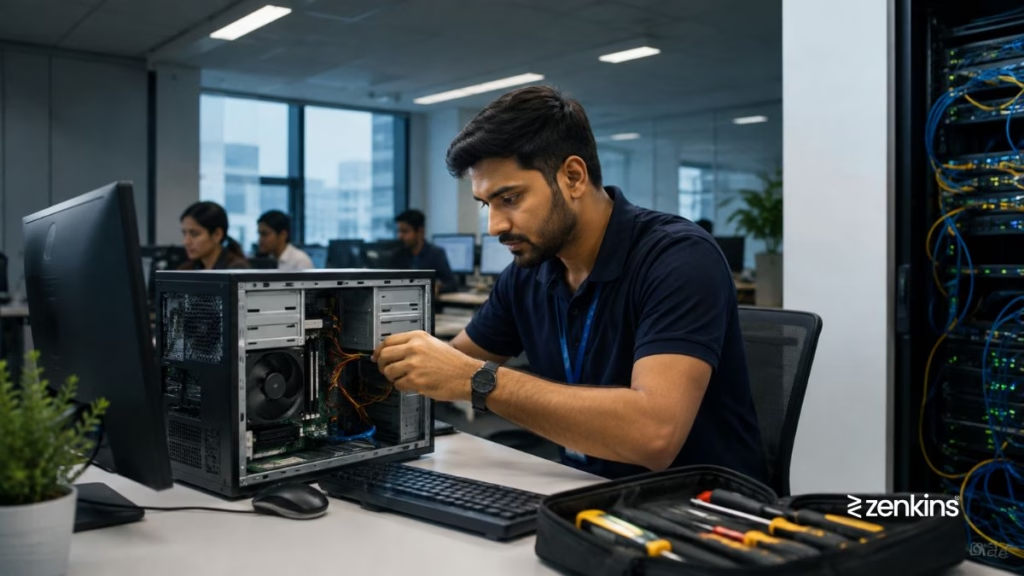
What is IT operations?
IT operations refers to the daily processes and activities involved in managing, maintaining, and supporting an organization’s IT infrastructure. This includes overseeing hardware, software, networks, data centers, and end-user devices to ensure systems run smoothly, securely, and efficiently.
Understanding what is IT operations is critical for businesses that depend on technology to support their core functions, reduce downtime, and deliver reliable services to users and customers.
Key Functions of IT Operations:
- System Monitoring and Performance Management
- Track uptime, latency, errors, and capacity of servers, networks, and applications.
- Incident and Problem Management
- Respond to outages, disruptions, and user-reported issues to restore service quickly.
- Change and Configuration Management
- Manage software updates, patch deployments, and system changes without disrupting users.
- Security Management
- Implement firewalls, antivirus tools, access controls, and threat monitoring.
- Backup and Disaster Recovery
- Ensure business continuity through regular data backups and recovery plans.
- User Support and Helpdesk
- Provide technical assistance to employees and customers across channels.
- Asset and Inventory Management
- Track IT hardware and software throughout their lifecycle.
Why IT Operations Matter:
- Keeps systems running 24/7
- Minimizes downtime and service disruptions
- Protects against data loss and cyber threats
- Supports business agility and scalability
- Ensures compliance with IT policies and standards
- Improves end-user experience through reliable service delivery
Tools Commonly Used in IT Operations:
- ITSM Platforms: ServiceNow, Jira Service Management, Freshservice
- Monitoring Tools: Nagios, Datadog, Zabbix, PRTG
- RMM Software: NinjaOne, Atera, N-able
- CMDB & Asset Tools: ManageEngine, Lansweeper
- Automation & Orchestration: Ansible, Puppet, Chef, PowerShell scripts
IT Operations vs IT Support:
| Feature | IT Operations | IT Support |
|---|---|---|
| Focus | Infrastructure management & performance | End-user issue resolution |
| Scope | Broad, includes systems, security, etc. | Specific to incidents, tickets, and users |
| Approach | Preventive and strategic | Reactive and user-focused |
Key Metrics for IT Operations:
- Uptime and availability
- Mean time to resolution (MTTR)
- System response time
- Support ticket volume and trends
- Patch compliance rate
- Infrastructure utilization
Final Thoughts
Knowing what is IT operations helps businesses ensure that their technology backbone remains strong, secure, and scalable. Efficient IT operations not only maintain day-to-day performance but also enable digital transformation, innovation, and growth.