Introduction
As businesses scale, technology complexity grows rapidly. Servers multiply. Cloud environments expand. Remote users increase. Security threats become more advanced.
Without a structured approach, IT becomes reactive instead of strategic.
This is where Managed IT Infrastructure becomes essential.
For startups and growing enterprises, outsourcing infrastructure management to a trusted partner like Zenkins enables predictable costs, improved uptime, stronger security, and scalable growth without the burden of building large in-house IT teams.
This guide explains everything decision-makers need to know.
What Is Managed IT Infrastructure?
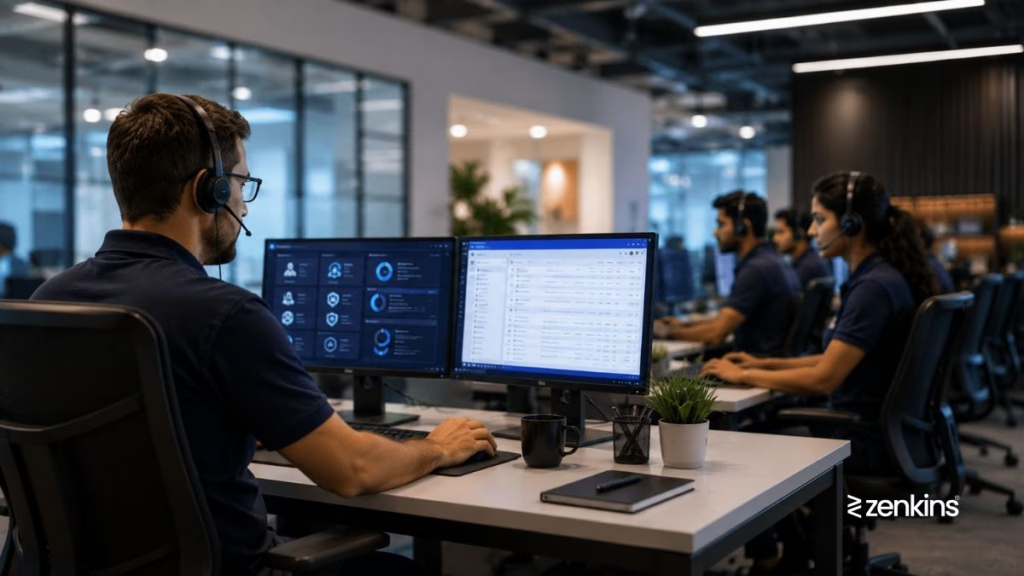
Managed IT Infrastructure refers to outsourcing the management, monitoring, maintenance, and optimization of your organization’s IT systems to a specialized service provider.
It typically includes:
- Server management
- Cloud infrastructure management
- Network configuration and administration
- Cybersecurity monitoring
- Backup and disaster recovery
- Endpoint management
- Infrastructure monitoring
- Patch management
- Performance optimization
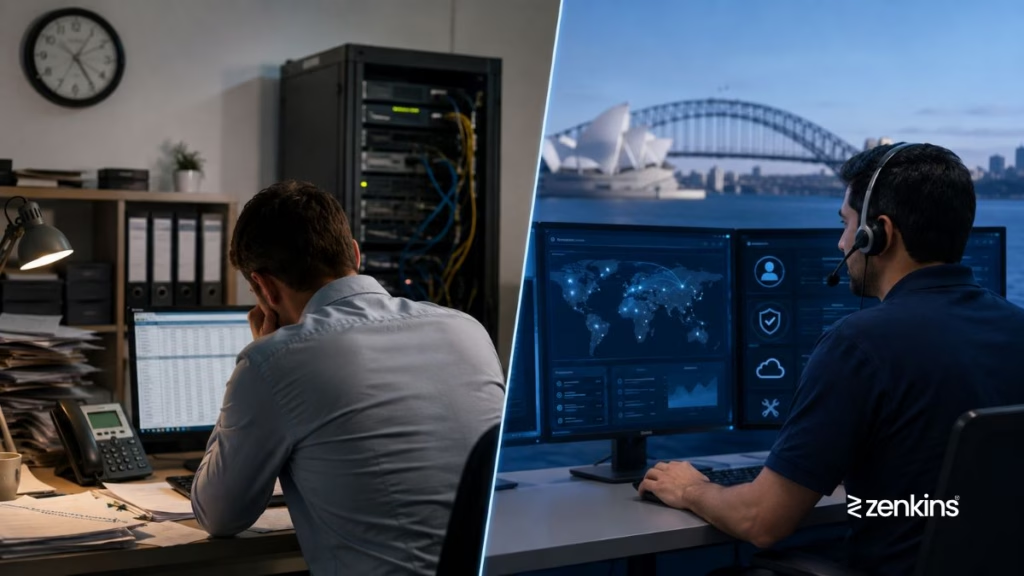
Instead of reacting to IT failures, businesses move toward proactive management with SLAs and measurable outcomes.
Core Components of Managed IT Infrastructure
1. Server Management
This includes physical and virtual servers, whether on-premise or in the cloud. Providers handle:
- Installation and configuration
- Performance tuning
- Security hardening
- OS patching
- Capacity planning
Virtualization platforms such as VMware and Microsoft Hyper-V are commonly managed under these services.
2. Cloud Infrastructure Management
Businesses using Amazon Web Services, Microsoft Azure, or Google Cloud require:
- Cloud architecture design
- Cost optimization
- Security configuration
- Identity access management
- Backup strategies
Managed providers ensure your cloud is not just deployed, but optimized continuously.
3. Network Configuration and Administration
A managed infrastructure service typically includes:
- Router and switch configuration
- Firewall management
- VLAN setup
- VPN deployment
- Network performance monitoring
Proper network configuration reduces latency, prevents unauthorized access, and ensures business continuity.
4. Cybersecurity Management
Cybersecurity is embedded within Managed IT Infrastructure. Services include:
- Firewall configuration
- Endpoint protection
- Intrusion detection
- SIEM monitoring
- Vulnerability assessments
- Zero Trust implementation
Security is no longer optional. It is foundational.
5. Infrastructure Monitoring
Continuous monitoring detects issues before users are impacted.
Managed providers deploy:
- Real-time monitoring tools
- Alerting systems
- Log analysis
- Automated remediation workflows
This proactive model significantly reduces downtime.
How Managed IT Infrastructure Works
The process typically follows five structured phases:
1. Assessment
- Audit of existing infrastructure
- Security risk evaluation
- Performance benchmarking
2. Architecture Design
- Cloud or hybrid strategy
- Network topology planning
- Security framework alignment
3. Implementation
- Migration
- Configuration
- Testing
- Documentation
4. Monitoring and Optimization
- 24/7 monitoring
- Incident management
- Capacity planning
5. Continuous Improvement
- Technology upgrades
- Security patches
- Cost optimization reviews
This lifecycle ensures your IT evolves alongside your business.
Why Growing Businesses Choose Managed IT Infrastructure
1. Predictable Costs
Instead of unpredictable capital expenditure, businesses move to operational expenditure with defined monthly pricing.
2. Access to Specialized Expertise
Hiring cloud architects, network engineers, and cybersecurity experts individually is expensive. Managed providers give access to certified teams.
3. Enhanced Security Posture
With ransomware attacks rising globally, proactive monitoring reduces risk exposure dramatically.
4. Improved Uptime
SLAs ensure uptime targets of 99.9% or higher, depending on architecture.
5. Scalability
As your user base grows, infrastructure scales without major reinvestment.
Managed IT Infrastructure vs Traditional Break-Fix Model
| Managed IT Infrastructure | Break-Fix Model |
|---|---|
| Proactive monitoring | Reactive repairs |
| Predictable monthly cost | Unpredictable repair costs |
| Security-first approach | Security after incidents |
| Continuous optimization | No performance improvement focus |
| SLA-backed performance | No guarantees |
Growing businesses benefit far more from proactive infrastructure management.
Industries That Benefit the Most
Managed infrastructure is especially valuable for:
- Finance and FinTech
- Healthcare
- E-commerce
- Manufacturing
- SaaS companies
- Logistics and Transportation
- Education
- Professional Services
Given Zenkins’ experience across industries like Banking, Healthcare, Retail, Manufacturing, Telecommunications, Energy, and Life Sciences, managed infrastructure becomes a strategic enabler rather than just IT support.
Cost Considerations
Costs depend on:
- Number of users
- Cloud vs on-premise footprint
- Compliance requirements
- Security level required
- 24/7 vs business-hour support
However, studies consistently show businesses reduce long-term IT costs by 20–40% when moving to managed infrastructure due to reduced downtime and optimized cloud usage.
Risks of Not Using Managed IT Infrastructure
Growing businesses without structured infrastructure management face:
- Frequent downtime
- Data breaches
- Compliance violations
- Poor network performance
- Rising cloud bills
- Shadow IT risks
- Unplanned capital expenses
The hidden cost of reactive IT is often higher than managed services.
When Should a Business Transition?
Consider Managed IT Infrastructure if:
- Your IT team spends more time firefighting than innovating
- Downtime is increasing
- Security incidents are rising
- Cloud bills are unpredictable
- You are planning expansion
- You are entering regulated industries
Managed IT Infrastructure and Digital Transformation
Digital transformation initiatives depend on stable infrastructure.
AI adoption. SaaS platforms. Remote work. Multi-cloud strategy.
All require structured infrastructure management.
Without strong foundations, digital initiatives fail.
Key Metrics to Track
Businesses should measure:
- Uptime percentage
- Mean Time to Detect (MTTD)
- Mean Time to Resolve (MTTR)
- Patch compliance rate
- Security incident frequency
- Cloud cost efficiency ratio
A managed provider delivers visibility across all these metrics.
How Zenkins Supports Managed IT Infrastructure
Zenkins offers:
- End-to-end infrastructure management
- L1, L2, L3 IT support
- Network configuration and administration
- Cloud migration and optimization
- Cybersecurity implementation
- IT infrastructure monitoring
- Disaster recovery planning
- Infrastructure automation
With expertise across Web, SaaS, Enterprise Software, and Digital Transformation, Zenkins aligns infrastructure with business strategy rather than treating it as an isolated technical function.
Future of Managed IT Infrastructure
In 2026 and beyond, infrastructure management is evolving toward:
- AI-driven monitoring
- Predictive maintenance
- Self-healing systems
- Zero Trust security frameworks
- Multi-cloud orchestration
- Infrastructure as Code
Businesses that adopt structured managed infrastructure today will be positioned for resilience tomorrow.
Final Thoughts
Managed IT Infrastructure is no longer optional for growing businesses. It is the backbone of secure, scalable, and high-performing digital operations.
Instead of reacting to problems, organizations can shift toward proactive management, cost predictability, and long-term resilience.
For startups and enterprises aiming to scale confidently, partnering with a strategic managed infrastructure provider like Zenkins ensures that technology becomes a growth enabler, not a bottleneck.