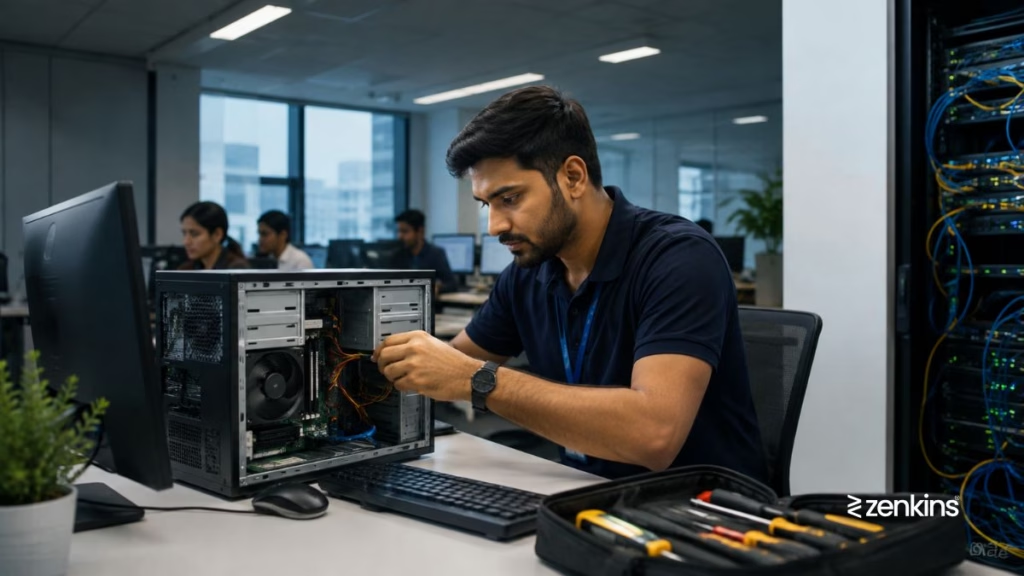
Security Threats and Malware Attacks are among the most critical challenges businesses face in today’s digital landscape. From ransomware to phishing and spyware, cyber threats can compromise confidential data, disrupt operations, and cause massive financial loss. An efficient IT Help Desk acts as the first line of defense — detecting, responding to, and mitigating these threats before they escalate.
The Problem
“Our systems are behaving strangely.”
“Users are reporting suspicious pop-ups.”
“We received an email that infected our shared drive.”
These are early warning signs of security threats and malware attacks. Without immediate containment and expert response, a single compromised endpoint can spread malware across the entire organization — leading to downtime, data corruption, or even ransom demands.
Modern businesses rely on 24/7 systems and remote access, making them more vulnerable to sophisticated cyberattacks. A well-structured Help Desk Security Response ensures early detection, swift action, and complete restoration.
Common Types of Security Threats and Malware Attacks
Help Desk teams frequently deal with a wide range of IT security incidents. Here are the most common ones businesses face daily:
- Phishing attacks targeting user credentials
- Ransomware infections encrypting data for ransom
- Spyware or keyloggers collecting sensitive information
- Trojan malware hiding within legitimate files
- Unauthorized access attempts or login anomalies
- Compromised VPN or remote access sessions
- Email spoofing or spam campaigns
- Malicious attachments or drive-by downloads
- Data exfiltration attempts
- Botnet and DDoS activity detection
Each of these requires a quick, coordinated response to protect critical assets and prevent lateral spread.
How a Help Desk Responds to Security Threats and Malware Attacks
A well-trained IT Help Desk Security Team uses a combination of monitoring tools, incident response frameworks, and escalation procedures to handle cybersecurity incidents effectively.
Step-by-Step Approach:
- Incident Identification – Detect suspicious activity through alerts or user reports.
- Containment – Isolate affected systems to prevent malware propagation.
- Threat Analysis – Assess malware type, entry vector, and potential impact.
- System Scan and Cleanup – Use antivirus, EDR, or sandboxing tools to remove malicious files.
- Patch and Update Vulnerabilities – Ensure OS, firewalls, and applications are up-to-date.
- Credential Reset and Policy Review – Mitigate compromised accounts and tighten access controls.
- User Awareness Communication – Alert users about phishing or ongoing threats.
- Post-Incident Reporting – Document root cause, resolution, and preventive measures.
By maintaining clear security workflows, the Help Desk ensures fast containment and minimal business disruption.
How Zenkins Help Desk Strengthens Cyber Defense
At Zenkins, our Security Help Desk Services combine real-time monitoring, advanced detection tools, and expert response protocols to safeguard your business from cyber threats. We help organizations maintain a secure IT environment — proactively and continuously.
Our Key Security Help Desk Services Include:
- 24/7 threat monitoring and alert management
- Malware detection and removal
- Email and phishing attack prevention
- Endpoint protection and antivirus management
- Firewall and access control configuration
- Incident response and root cause analysis
- Patch management and system hardening
- User security awareness training
- Ransomware recovery assistance
- Data protection and backup validation
Our certified security specialists and help desk engineers ensure your business is protected against both known and emerging cyber threats.
Best Practices to Prevent Security Threats and Malware Attacks
Prevention is the most effective form of defense. Businesses can minimize their exposure to cyber risks by adopting proactive measures like:
- Regular software updates and security patches
- Strong password and MFA enforcement
- Email filtering and phishing simulation training
- Endpoint Detection and Response (EDR) implementation
- Firewall, VPN, and intrusion detection system audits
- Routine data backup and disaster recovery testing
- Limiting admin privileges and access control
- Ongoing user education on cyber hygiene
With continuous monitoring and prompt incident response from Zenkins, you stay one step ahead of cybercriminals.
When to Engage Professional Security Help Desk Support
If your organization lacks dedicated cybersecurity staff or experiences recurring incidents like malware infections, suspicious logins, or phishing attempts — it’s time to get professional help.
Zenkins’ Security Help Desk Services provide a complete layer of cyber protection through real-time monitoring, malware management, and security automation. We ensure your systems are secure, compliant, and resilient — around the clock.
Final Thoughts
Every business — small or large — is a potential target for cyberattacks. A single malware infection can halt operations, compromise data, and damage reputation.
By partnering with Zenkins’ Security Help Desk, you get peace of mind knowing that your infrastructure is protected 24/7 by experts who understand prevention, detection, and rapid response.
Safeguard your business with Zenkins.
Zenkins’ Security Help Desk and Malware Response Services help identify, contain, and prevent cyber threats before they impact your business.
Contact us to strengthen your IT defense today.