
Table of Contents
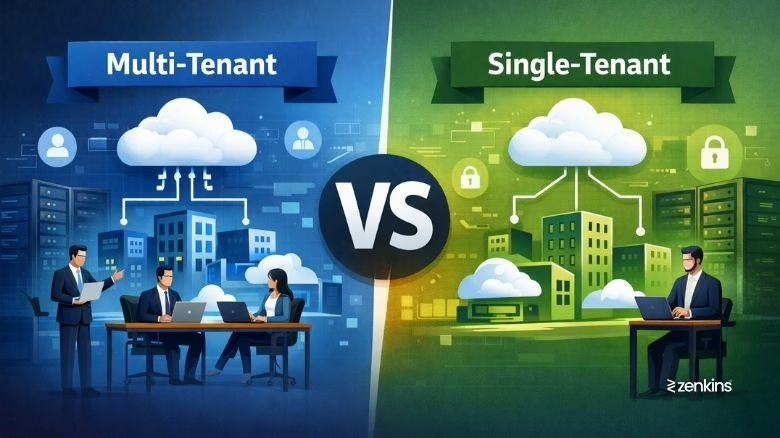
Multi-Tenant vs Single-Tenant SaaS Architecture: Complete Guide
Building a successful SaaS platform requires more than great features and a polished user interface. Behind every scalable SaaS product lies a carefully designed architecture that determines how efficiently the system handles growth, security, performance, and operational complexity.
One of the most important architectural decisions when developing a SaaS platform is choosing between Multi-Tenant vs Single-Tenant SaaS Architecture.
This decision directly affects:
- Infrastructure scalability
- Application performance
- Security and data isolation
- Development complexity
- Product customization
- Operational costs
For SaaS startups and enterprises alike, understanding the difference between Multi-Tenant vs Single-Tenant SaaS Architecture is critical for building a sustainable and scalable product.
In this guide, we will explain:
- What SaaS architecture means
- How multi-tenant architecture works
- How single-tenant architecture works
- Key differences between both models
- Advantages and disadvantages of each architecture
- Real-world SaaS architecture examples
- When to choose multi-tenant vs single-tenant architecture
- Best practices for designing scalable SaaS platforms
If you are building or modernizing a SaaS product, this guide will help you choose the right architecture for long-term success.
What Is SaaS Architecture?
SaaS architecture refers to the technical design and infrastructure that powers a Software-as-a-Service application delivered through the cloud.
Unlike traditional software installed on individual machines, SaaS platforms run on centralized cloud infrastructure and serve users through web browsers or APIs.
A typical SaaS architecture includes several core components:
- Application servers
- Databases
- API layers
- Authentication systems
- Storage infrastructure
- Monitoring systems
- Load balancing and scaling mechanisms
The goal of SaaS architecture is to ensure that applications can:
- Serve multiple customers simultaneously
- Scale as user demand grows
- Maintain strong security and data isolation
- Deliver consistent performance
The two most common SaaS architecture models used today are:
1. Multi-Tenant SaaS Architecture
2. Single-Tenant SaaS Architecture
Understanding the differences between these architectures helps companies build scalable and secure cloud platforms.
What Is Multi-Tenant SaaS Architecture?
Multi-tenant SaaS architecture is a model where a single instance of an application serves multiple customers, known as tenants.
In this model, the software infrastructure is shared among different customers, but each tenant’s data remains logically isolated.
This architecture allows SaaS providers to deliver services efficiently while minimizing infrastructure costs.
Key characteristics of multi-tenant architecture include:
- One application instance serving multiple customers
- Shared infrastructure and computing resources
- Logical separation of tenant data
- Centralized updates and maintenance
Most modern SaaS companies use multi-tenant architecture because it allows them to support large numbers of users with minimal operational overhead.
How Multi-Tenant SaaS Architecture Works
In multi-tenant systems, the application identifies each user or organization through a tenant identifier.
When a user logs in:
- The system authenticates the user.
- The application identifies the tenant ID.
- Data queries are filtered using tenant isolation rules.
- The user only sees data belonging to their organization.
Although multiple tenants use the same infrastructure, strict access controls ensure that data remains separated.
Multi-tenant systems can store data using different approaches.
Shared Database with Shared Schema
All tenants share the same database tables.
Advantages:
- Maximum efficiency
- Simplified infrastructure
- Lower operational cost
Challenges:
- Strong security and access control required
Shared Database with Separate Schemas
Each tenant has a dedicated schema within the same database.
Benefits:
- Better data isolation
- Easier tenant-level management
Challenges:
- Increased database complexity
Separate Databases per Tenant
Each tenant has its own database while sharing the application layer.
Advantages:
- Stronger data isolation
- Better scalability for large tenants
Challenges:
- More infrastructure management
Advantages of Multi-Tenant SaaS Architecture
Multi-tenant architecture offers several benefits that make it the preferred choice for many SaaS platforms.
1. Lower Infrastructure Costs
Because resources are shared across tenants, infrastructure usage becomes more efficient.
Benefits include:
- Reduced cloud hosting costs
- Efficient server utilization
- Lower operational expenses
For SaaS startups and growing platforms, multi-tenancy allows scaling without proportional infrastructure growth.
2. High Scalability
Multi-tenant systems are designed to scale easily.
Cloud infrastructure can dynamically allocate resources based on usage.
This allows SaaS platforms to support:
- Thousands of customers
- Millions of users
- Rapid growth without major architecture changes
3. Faster Product Updates
One of the biggest advantages of multi-tenant SaaS architecture is centralized updates.
When developers deploy a new feature or fix a bug:
- The update applies to all tenants instantly.
Benefits include:
- Faster innovation
- Simplified release management
- Consistent product experience
4. Simplified Maintenance
Managing a single application environment reduces operational complexity.
Engineering teams can focus on:
- product improvements
- security enhancements
- performance optimization
Instead of maintaining multiple application instances.
5. Faster Customer Onboarding
Multi-tenant platforms allow instant onboarding.
When a new customer signs up:
- No separate infrastructure needs to be provisioned.
This enables SaaS companies to scale quickly.
Challenges of Multi-Tenant SaaS Architecture
Despite its advantages, multi-tenant architecture also introduces technical challenges.
Data Isolation and Security
Because infrastructure is shared, strong security controls are essential.
Best practices include:
- role-based access control
- encryption at rest and in transit
- tenant-aware APIs
Without proper isolation mechanisms, security risks may arise.
Noisy Neighbor Problem
Heavy resource usage by one tenant can impact system performance for others.
Solutions include:
- resource throttling
- containerization
- infrastructure auto-scaling
Limited Customization
Multi-tenant systems usually maintain standardized functionality.
Deep customization for individual customers may be difficult.
Enterprise clients sometimes require greater flexibility.
What Is Single-Tenant SaaS Architecture?
Single-tenant SaaS architecture is a model where each customer has a dedicated application instance and infrastructure environment.
In this architecture:
- Every tenant operates in an isolated environment
- Databases are completely separate
- Infrastructure resources are dedicated
Although the software codebase may be similar, each tenant runs independently.
How Single-Tenant SaaS Architecture Works
In single-tenant systems:
- A new customer signs up.
- A dedicated environment is provisioned.
- A new application instance is deployed.
- The tenant receives isolated infrastructure.
Each tenant environment may include:
- dedicated application server
- dedicated database
- isolated storage
- independent configurations
This architecture is often used by enterprise SaaS providers.
Advantages of Single-Tenant SaaS Architecture
Single-tenant architecture offers several benefits, especially for enterprise and regulated industries.
Strong Data Isolation
Each tenant operates in a completely isolated environment.
Benefits include:
- stronger data security
- simplified compliance management
- reduced risk of cross-tenant data exposure
This makes single-tenancy attractive for industries like healthcare and finance.
High Customization Capability
Enterprise clients often require unique configurations.
Single-tenant environments allow:
- custom feature implementations
- dedicated integrations
- specialized performance optimizations
This flexibility can improve enterprise customer satisfaction.
Predictable Performance
Because infrastructure resources are not shared, tenants experience consistent performance.
This eliminates noisy neighbor issues common in shared environments.
Easier Compliance Management
Some regulatory standards require strict infrastructure isolation.
Single-tenant architecture can help meet requirements such as:
- healthcare regulations
- financial compliance frameworks
- government security standards
Challenges of Single-Tenant SaaS Architecture
Although single-tenancy offers strong isolation, it introduces operational complexity.
Higher Infrastructure Costs
Each tenant requires dedicated infrastructure.
Costs increase due to:
- separate servers
- individual databases
- isolated storage
For SaaS providers serving thousands of customers, this model can become expensive.
Complex Maintenance
Updates must be deployed across multiple tenant environments.
This increases:
- deployment complexity
- testing requirements
- operational workload
Slower Product Innovation
Rolling out new features across multiple environments may take longer.
Compared to multi-tenant architecture, development velocity can be slower.
Multi-Tenant vs Single-Tenant SaaS Architecture Comparison
Below is a simplified comparison.
| Feature | Multi-Tenant Architecture | Single-Tenant Architecture |
|---|---|---|
| Infrastructure | Shared | Dedicated |
| Cost Efficiency | High | Lower |
| Scalability | Very High | Moderate |
| Data Isolation | Logical | Physical |
| Customization | Limited | High |
| Maintenance | Easier | Complex |
| Deployment | Centralized | Distributed |
| Performance | Shared resources | Dedicated resources |
Real-World SaaS Architecture Examples
Understanding real-world implementations helps clarify the differences between multi-tenant vs single-tenant SaaS architecture.
Multi-Tenant SaaS Platforms
Common multi-tenant platforms include:
- CRM platforms
- project management tools
- collaboration software
- marketing automation platforms
- analytics tools
These platforms serve thousands of organizations through shared infrastructure.
Single-Tenant SaaS Platforms
Single-tenant environments are often used in:
- healthcare systems
- financial software platforms
- enterprise ERP systems
- government applications
These systems prioritize security and compliance.
Hybrid SaaS Architecture
Many modern SaaS companies combine both approaches using hybrid architecture.
In this model:
- Small and mid-size customers use multi-tenant infrastructure.
- Large enterprise clients receive dedicated environments.
This hybrid approach offers:
- scalability
- cost optimization
- enterprise customization
Hybrid SaaS architecture is becoming increasingly popular for growing SaaS companies.
Best Practices for Designing SaaS Architecture
Whether choosing multi-tenant or single-tenant architecture, several best practices help build scalable platforms.
Design for Scalability from the Beginning
Scalability should be part of the architecture from day one.
Best practices include:
- microservices architecture
- containerized deployment
- cloud-native infrastructure
These approaches support rapid scaling.
Implement Strong Security Controls
Security must be integrated into every layer of the architecture.
Key measures include:
- tenant-aware authentication
- encryption
- API security
- role-based access control
Build Modular Systems
Modular architecture improves flexibility and maintainability.
This includes:
- API-driven services
- microservices
- loosely coupled components
Implement DevOps Automation
Automation helps maintain large SaaS infrastructures.
Common DevOps practices include:
- CI/CD pipelines
- infrastructure as code
- automated monitoring
These practices reduce operational overhead.
Choosing the Right SaaS Architecture
Selecting between Multi-Tenant vs Single-Tenant SaaS Architecture depends on several factors.
Key considerations include:
- target customers
- security requirements
- customization needs
- scalability expectations
- operational budget
Startups typically choose multi-tenant architecture for scalability.
Enterprise SaaS providers may combine multi-tenant and single-tenant models.
How Zenkins Helps Build Scalable SaaS Platforms
Building scalable SaaS platforms requires expertise in cloud architecture, backend engineering, and modern development frameworks.
Zenkins helps startups and enterprises design and develop scalable SaaS platforms with robust architecture.
Our SaaS development capabilities include:
- SaaS architecture consulting
- multi-tenant platform development
- cloud-native application development
- microservices architecture implementation
- API development and integrations
- DevOps automation and CI/CD pipelines
- SaaS platform modernization
Whether you are building a new SaaS product or scaling an existing platform, Zenkins helps create architectures optimized for growth, performance, and security.
FAQs: Multi-Tenant vs Single-Tenant SaaS Architecture
What is the difference between multi-tenant and single-tenant SaaS architecture?
The main difference between multi-tenant vs single-tenant SaaS architecture is infrastructure sharing. In multi-tenant architecture, multiple customers share the same application and infrastructure while keeping their data logically isolated. In single-tenant architecture, each customer has a dedicated application instance and database, providing stronger isolation and customization.
What is multi-tenant SaaS architecture?
Multi-tenant SaaS architecture is a cloud software model where one application instance serves multiple customers (tenants). Each tenant’s data is isolated using logical separation methods such as tenant IDs or schemas. This architecture allows SaaS providers to scale efficiently while reducing infrastructure and operational costs.
What is single-tenant SaaS architecture?
Single-tenant SaaS architecture is a model where each customer has a dedicated application environment and database. The infrastructure is not shared with other customers, which improves data isolation, customization flexibility, and security. This model is often used for enterprise or highly regulated applications.
Which is better: multi-tenant or single-tenant SaaS architecture?
There is no universal answer when comparing multi-tenant vs single-tenant SaaS architecture. Multi-tenant architecture is better for scalability and cost efficiency, while single-tenant architecture provides stronger data isolation and customization. The best choice depends on the product’s target customers, security requirements, and scalability goals.
Why do most SaaS companies use multi-tenant architecture?
Most SaaS companies prefer multi-tenant architecture because it allows them to serve multiple customers using shared infrastructure, reducing hosting costs and simplifying system maintenance. It also enables faster onboarding, centralized updates, and better scalability, making it ideal for SaaS startups and high-growth platforms.
Is multi-tenant SaaS architecture secure?
Yes, multi-tenant SaaS architecture can be highly secure when implemented properly. Security is ensured through tenant isolation, access control policies, data encryption, and secure APIs. Modern SaaS platforms use strong authentication and authorization mechanisms to prevent cross-tenant data access.
When should a company choose single-tenant SaaS architecture?
A company should choose single-tenant SaaS architecture when customers require strong data isolation, high customization, or regulatory compliance. Industries such as healthcare, finance, and government systems often prefer single-tenant environments because they provide dedicated infrastructure and simplified compliance management.
What are the advantages of multi-tenant SaaS architecture?
The main advantages of multi-tenant SaaS architecture include lower infrastructure costs, easier scalability, centralized updates, simplified maintenance, and faster onboarding of customers. Because resources are shared across tenants, SaaS providers can deliver software efficiently while maintaining high performance.
What are the disadvantages of multi-tenant SaaS architecture?
Some challenges of multi-tenant SaaS architecture include data isolation complexity, limited customization, and potential performance issues caused by heavy resource usage from other tenants. These challenges can be mitigated using proper system design, load balancing, and tenant-aware security mechanisms.
What are the advantages of single-tenant SaaS architecture?
Single-tenant SaaS architecture offers strong data isolation, better customization options, predictable performance, and easier compliance management. Each customer operates in a dedicated environment, making it ideal for enterprise organizations with strict security or regulatory requirements.
What are the disadvantages of single-tenant SaaS architecture?
The primary disadvantages of single-tenant SaaS architecture include higher infrastructure costs, increased operational complexity, and slower software updates. Because each tenant has a dedicated environment, managing deployments and maintenance across multiple tenants can require significant resources.
Can a SaaS platform use both multi-tenant and single-tenant architecture?
Yes, many modern SaaS platforms use hybrid SaaS architecture, combining both models. Small and mid-sized customers may use multi-tenant infrastructure, while enterprise customers receive dedicated single-tenant environments. This approach allows companies to balance scalability, cost efficiency, and customization.
What industries typically use single-tenant SaaS architecture?
Industries that commonly use single-tenant SaaS architecture include healthcare, financial services, government systems, defense applications, and large enterprise software platforms. These industries often require strict security standards, regulatory compliance, and high levels of customization.
What industries commonly use multi-tenant SaaS architecture?
Multi-tenant SaaS architecture is widely used in CRM platforms, project management tools, marketing automation software, HR systems, collaboration platforms, and analytics applications. These platforms serve many organizations and benefit from the scalability and efficiency of shared infrastructure.
Does multi-tenant SaaS architecture reduce costs?
Yes, multi-tenant SaaS architecture significantly reduces infrastructure costs because multiple tenants share the same application servers, storage systems, and computing resources. This shared model allows SaaS providers to maximize resource utilization while lowering operational and hosting expenses.
How does data isolation work in multi-tenant SaaS architecture?
In multi-tenant SaaS architecture, data isolation is achieved using tenant identifiers, database schemas, access control policies, and encryption mechanisms. Each user request is associated with a tenant ID, ensuring that users can only access data belonging to their organization.
What database strategies are used in multi-tenant SaaS architecture?
Common database strategies in multi-tenant SaaS architecture include shared database with shared schema, shared database with separate schemas, and separate databases per tenant. Each approach provides different levels of scalability, isolation, and operational complexity.
How does SaaS architecture affect scalability?
SaaS architecture directly impacts scalability. Multi-tenant architecture allows applications to scale efficiently by sharing infrastructure, while single-tenant architecture scales by adding dedicated environments for each customer. Proper cloud infrastructure design is essential for supporting large user bases.
What is hybrid SaaS architecture?
Hybrid SaaS architecture is a model that combines multi-tenant and single-tenant environments within the same platform. Smaller customers typically use shared infrastructure, while enterprise customers receive dedicated resources. This approach helps SaaS companies balance cost efficiency with enterprise-level requirements.
How do companies choose between multi-tenant vs single-tenant SaaS architecture?
Companies choose between multi-tenant vs single-tenant SaaS architecture based on factors such as scalability needs, security requirements, customization demands, compliance standards, and operational costs. Startups typically choose multi-tenancy for scalability, while enterprise solutions may adopt single-tenancy or hybrid architectures.
Conclusion
Understanding the differences between Multi-Tenant vs Single-Tenant SaaS Architecture is essential for building successful SaaS platforms.
Multi-tenant architecture offers:
- cost efficiency
- scalability
- simplified maintenance
Single-tenant architecture provides:
- stronger data isolation
- deeper customization
- improved compliance capabilities
In many cases, hybrid architectures combine the advantages of both models.
The right choice depends on your product strategy, customer requirements, and long-term scalability goals.
By designing the right SaaS architecture from the start, companies can build platforms capable of supporting rapid growth, strong security, and excellent user experiences.