Definition
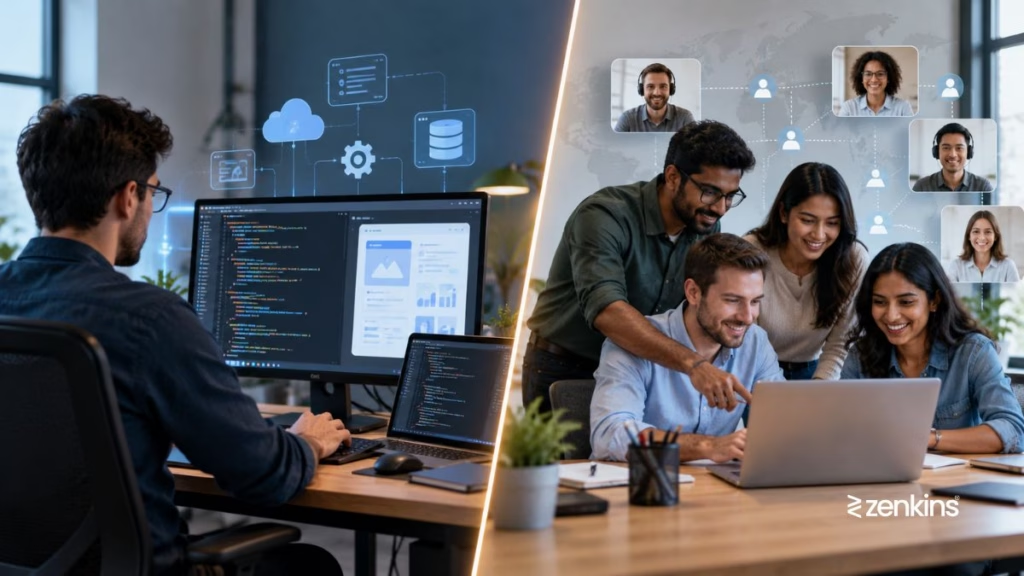
Legacy System Migration is the process of moving data, applications, or entire IT systems from outdated technologies to modern platforms. It involves upgrading or replacing old software, databases, and infrastructure with scalable, secure, and efficient solutions that align with current business needs and future growth.
Importance of Legacy System Migration
Many organizations still rely on legacy systems that are costly to maintain, lack modern features, and pose security risks. Migrating from these outdated systems ensures business continuity, improves operational efficiency, and allows enterprises to adopt emerging technologies like cloud computing, AI, and automation.
Benefits of Legacy System Migration
- Reduced Maintenance Costs – Minimizes expenses on outdated technologies.
- Improved Security – Eliminates vulnerabilities common in old systems.
- Enhanced Performance – Boosts application speed and scalability.
- Integration with Modern Tools – Connects with APIs, cloud, and third-party applications.
- Business Agility – Enables faster response to market changes.
- User Experience Improvement – Provides modern interfaces and seamless functionality.
Common Approaches to Legacy System Migration
- Rehosting (Lift-and-Shift) – Moving applications to modern infrastructure without major changes.
- Replatforming – Making small modifications to optimize for new environments.
- Refactoring/Re-architecting – Redesigning systems for modern architecture (e.g., microservices, cloud-native).
- Replacement – Retiring old systems and building entirely new applications.
- Hybrid Approach – Combining partial migration with new solutions.
Challenges in Legacy Migration
- Data Integrity Risks – Ensuring accurate and secure data transfer.
- Downtime Concerns – Avoiding service disruption during migration.
- Complex Dependencies – Legacy systems often interconnect with multiple business processes.
- Skill Gaps – Finding experts familiar with both old and new technologies.
Best Practices for Successful Migration
- Conduct thorough system audits before migration.
- Prioritize data security and compliance during transfer.
- Use automation tools for faster and error-free migration.
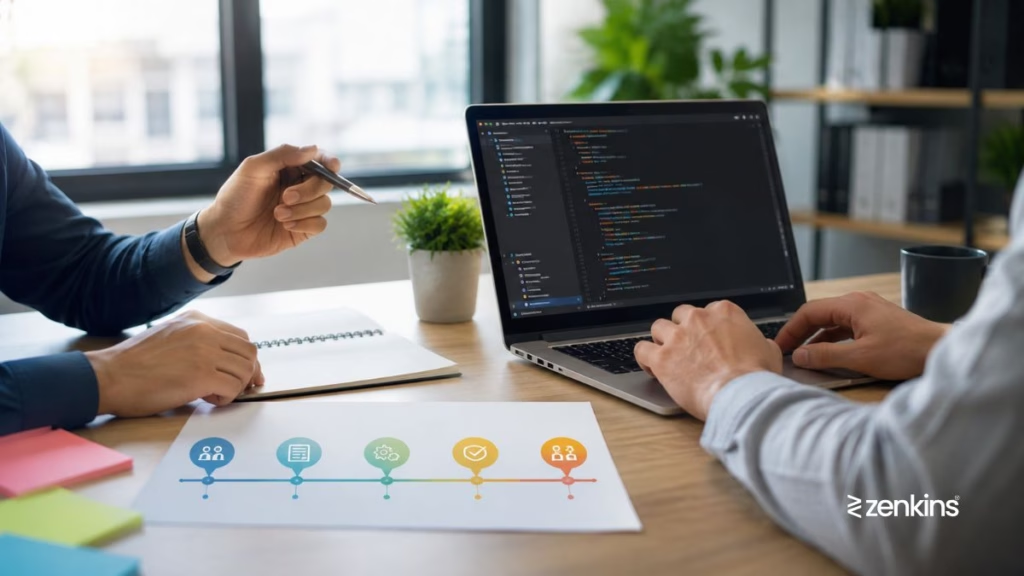
- Adopt phased migration to reduce risks and downtime.
- Partner with experienced migration experts like Zenkins.
Zenkins’ Expertise in Legacy System Migration
At Zenkins, we specialize in legacy system modernization and migration services, helping businesses move from outdated platforms to modern, scalable, and secure environments. Our migration strategies include cloud adoption, API integration, microservices architecture, and database modernization.
We ensure minimal downtime, maintain data integrity, and provide post-migration support so businesses can focus on innovation instead of legacy system limitations. Whether you’re migrating to AWS, Azure, Google Cloud, or custom-built modern infrastructure, Zenkins ensures a smooth transition with long-term value.